
Panel Bender vs Press Brake: Which Fits Your Factory?
Introduction
When comparing panel benders and press brakes, most discussions tend to revolve around surface-level factors such as speed, automation, or initial cost. While these points are easy to quantify, they rarely lead to a clear or confident decision in real production environments.
Press brake and panel bender are two different sheet metal bending technologies designed for different production logic, not direct performance competition.
In practice, the real question is not which machine performs better in isolation, but which one integrates more effectively into your production system, including workflow efficiency, labor involvement, and scalability.
I. Understanding the Press Brake
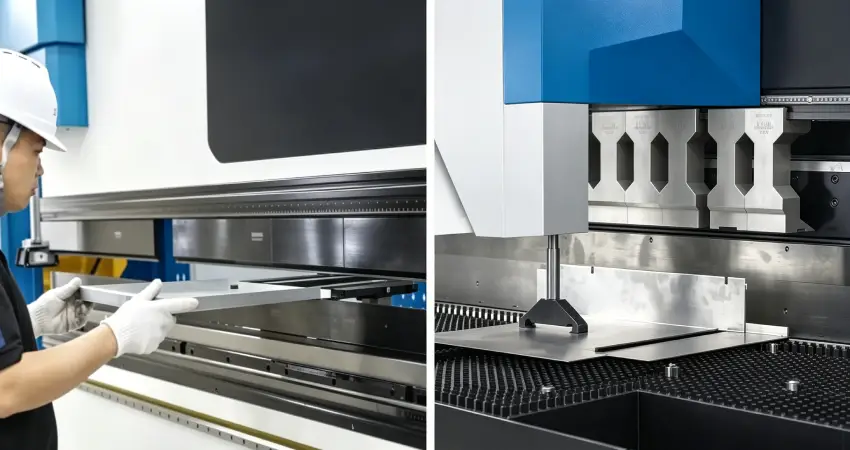
A press brake is a force-based sheet metal bending machine that forms parts using a punch and die system.
It works by applying vertical force to bend metal sheet step by step. Each bend is performed as a separate operation, requiring the operator to position and reposition the workpiece until the final shape is completed.
This segmented process may appear less efficient at first glance, but it is precisely what gives the press brake its defining strength: adaptability.
In summary, press brake prioritize flexibility over automation.
At the same time, this flexibility also places higher demands on tooling selection, which plays a critical role in both bending accuracy and long-term cost efficiency. (For a deeper look, see our guide on Press Brake Tooling Selection: 7 Costly Mistakes to Avoid.)
In practical terms, press brakes can handle a wide range of applications, including thick materials requiring high tonnage and complex geometries that are difficult to standardize.
However, production efficiency is highly dependent on operator skill and manual handling.
II. Understanding the Panel Bender
A panel bender is a process-based sheet metal forming machine that completes multiple bend automatically in a single clamping cycle.
Unlike press brakes, the sheet remains fixed while a folding beam performs sequential bending operations automatically.
This transform traditional step-by-step bending into a continuous production process.
In summary, panel benders prioritize automation and consistency over manual flexibility.
The key advantages of this approach is process stability. Cycle times are predictable, and output quality is less dependent on operator experience.
However, panel benders are best suited for:
- Thin to medium sheet metal
- Standardized part structures
- High-volume repetitive production
They are less suitable for thick materials and highly complex geometries.
III. The Real Difference: Workflow as a Production Strategy
The fundamental difference between press brakes and panel benders lies in workflow structure rather than mechanical capability.
A press brake uses a segmented workflow:
- Position → Bend → Reposition → Repeat
A panel bender uses a continuous workflow:
- Clamp once → Automatic multi-side bending
This shift changes production from operator-driven to process-driven manufacturing.
As a result, panel benders improve consistency and scalability, while press brakes maintain flexibility for variable production.
IV. Press Brake vs Panel Bender: Quick Comparison Overview
The key differences between press brakes and panel benders can be summarized as follows:
| Key Factor | Press Brake | Panel Bender |
| Working Principle | Force-based bending | Process-based bending |
| Workflow | Step-by-step, manual repositioning | Continuous, single setup |
| Labor Dependency | High | Low |
| Production Speed | Operator-dependent | Stable and cycle-based |
| Material Thickness | Suitable for thin, medium and thick sheets | Suitable for thin sheets |
| Part Complexity | High flexibility | Best for standardized parts |
| Automation Level | Semi-automatic | High automation potential |
| Surface Quality | Possible tool marks | Better surface protection |
| Cost Structure | Lower initial, higher variable cost | Higher initial, lower per-part cost |
This comparison helps identify which machine better aligns with specific production requirements.
V. Cost Structure: Beyond Initial Investment
The real cost difference between press brakes and panel benders is not equipment price, but long-term production efficiency.
Press brakes require lower initial investment but involve high operational costs due to:
- Skilled labor dependency
- Frequent setup adjustments
- Higher variability in output
Panel benders, on the other hand, reduce labor dependency and improve consistency, resulting in lower cost per part in high-volume production.
In summary: press brake=lower entry cost, high variable cost; panel bender=higher entry cost, lower unit cost at scale.
VI. Choosing Based on Production Scenarios
Machine selection should be based on production structure rather than specifications alone.
A press brake is typically more suitable when production involves
- Frequent design changes
- Complex geometries
- Thick sheet metal requiring high forming force
A panel bender is more suitable when production focuses on:
- Repetitive manufacturing
- Standardized components
- High efficiency and labor reduction
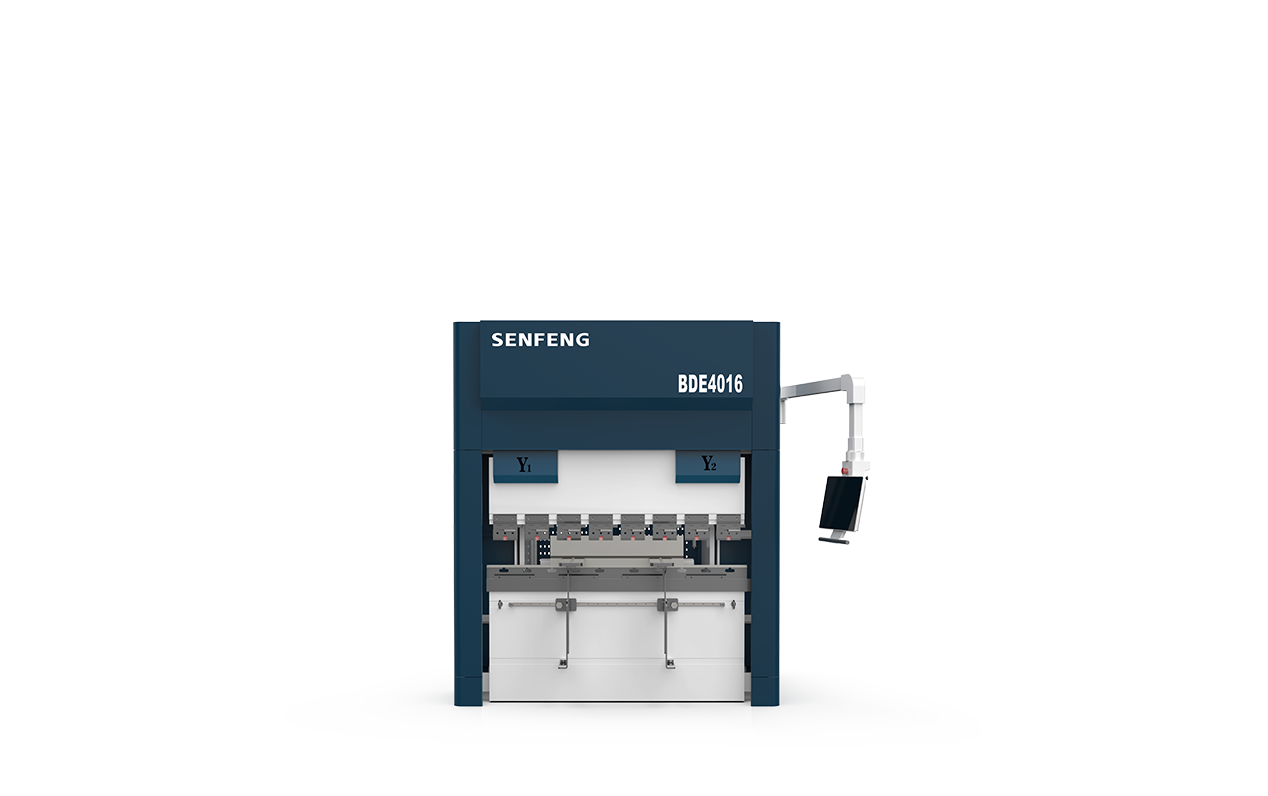
For manufacturers evaluating equipment options in real production environments, reviewing actual machine configurations can help make a more informed decision. SENFENG provides a wide range of solutions covering different production needs.
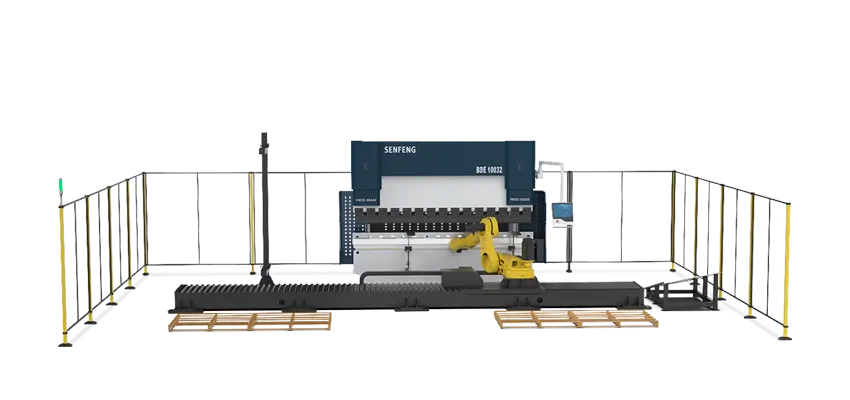
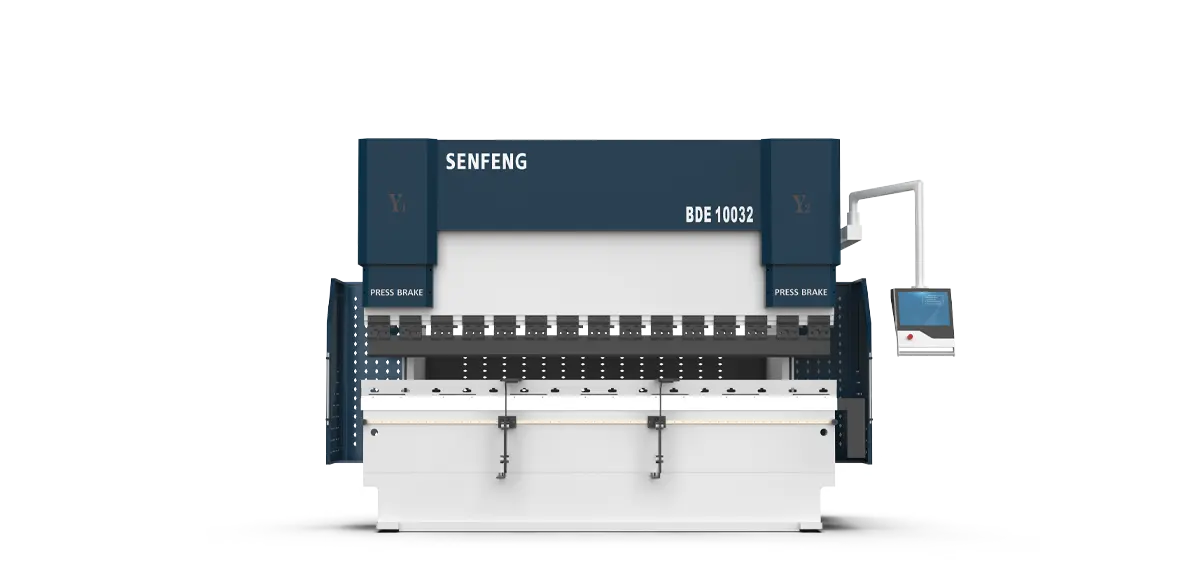
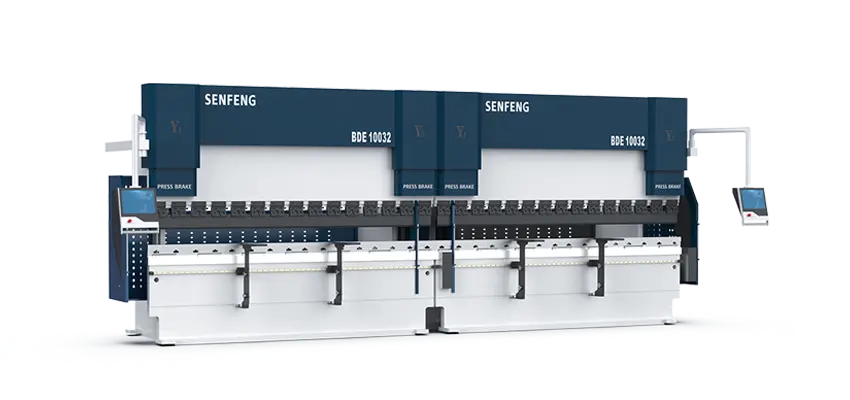
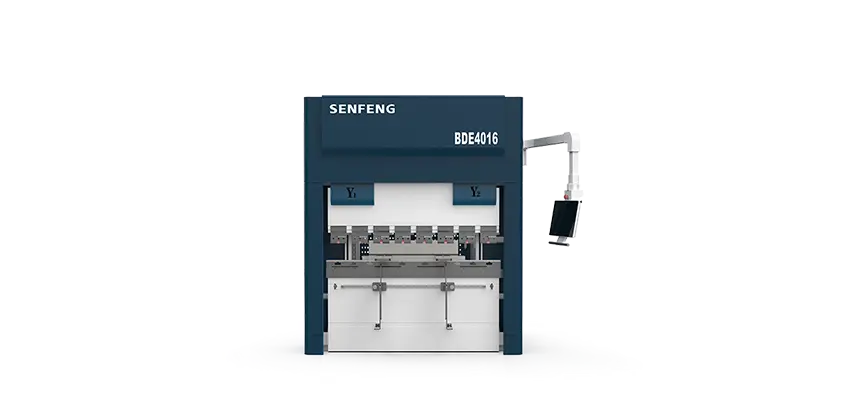
For example, in press brake applications, models such as the BDE10032 CNC press brake and BDE series all-electric press brake are widely used for flexible and high-precision bending tasks.
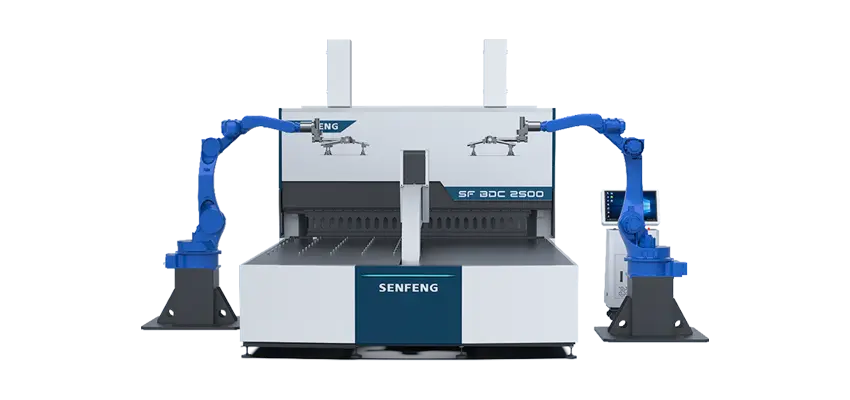
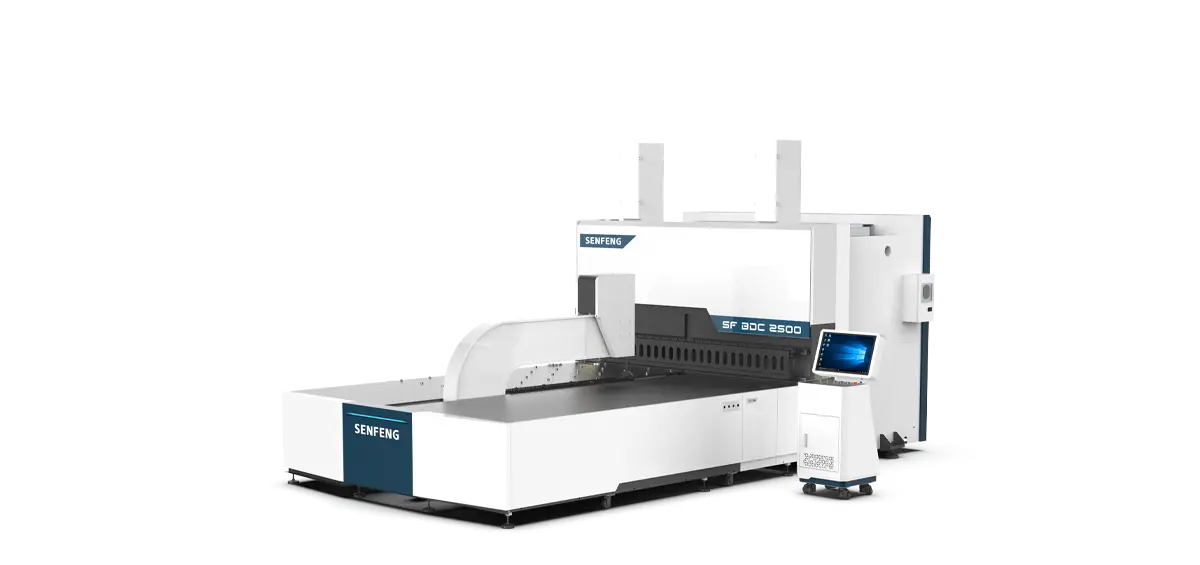
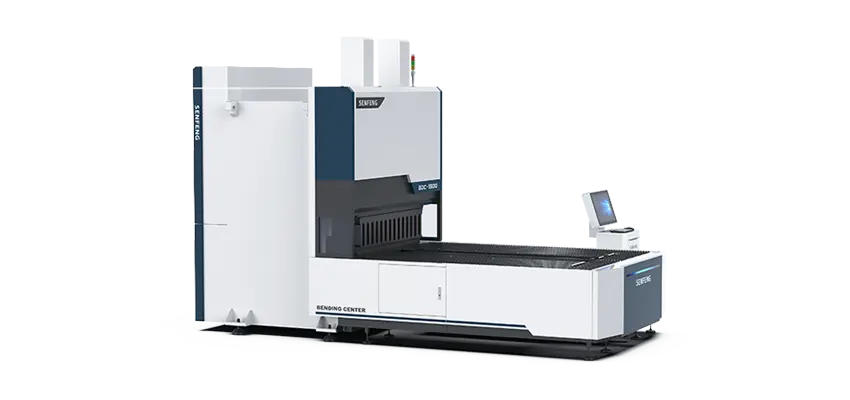
For automated production environments, panel bender solutions like the BDC-2500 automatic panel bender and BDC-1500 suction-cup panel bender are designed for high-efficiency, batch processing of sheet metal parts.
In practice, selecting the right configuration depends on your material type, production volume, and level of automation required.
VII. Industry Practice: A Combined Approach
In many advanced manufacturing environment, the decision is not binary.
Instead, both technologies are used together: panel benders handle high-volume, repetitive parts, while press brakes are used for custom or complex applications requiring flexibility.
This combined approach allows manufacturers to balance efficiency and adaptability, ensuring that each machine is used where it delivers the highest value.
Conclusion
Panel benders and press brakes are not competing technologies, but rather two different solutions designed for different production logic.
A press brake provides flexibility and adaptability, making it ideal for variable and complex production needs. A panel bender focuses on efficiency and consistency, making it suitable for scalable, repetitive manufacturing.
The most effective decision is not choosing one over the other, but understanding how each fits into your production system to achieve the right balance between flexibility and efficiency.
FAQ
1. What is the main difference between a panel bender and a press brake?
The main difference is workflow. A press brake performs bending step by step, while a panel bender completes multiple bends automatically in one setup.
2. Is a panel bender better than a press brake?
No. Panel benders are better for high-volume production, while press brakes are better for flexible and complex applications.
3. Can a panel bender replace a press brake?
In most cases, no. They are complementary machines used for different production needs.
4. What materials are suitable for panel benders?
Panel benders are best suited for thin to medium sheet metal.
5. Are press brakes suitable for thick materials?
Yes. Press brakes are ideal for thick materials due to their high tonnage capability.
6. Which machine requires less labor?
Panel benders require less labor due to automation, while press brakes rely more on operator skill.
7. Which industries use panel benders most?
Industries such as electrical cabinets, HVAC systems, enclosures, and metal furniture commonly use panel benders.