
Fiber Tube Laser Cutter for Structural Steel
Structural steel is the backbone of modern architecture. From industrial buildings and warehouses to bridges and stadiums, steel structures are highly dependent on tubes and hollow profiles such as square tubes, circular tubes and hollow structural section profiles.
Traditionally, these parts have been machined by saws, drill presses, and manual layouts, often resulting in slow production and inconsistent accuracy. Today, fiber tube laser cutting technology is changing the way structural steel parts are manufactured.
This guide explains how fiber tube lasers work, why they are suitable for structural steel, and what manufacturers should consider before investing in one.
I. Why Structural Steel Manufacturing Requires Tube Laser Cutter?
Structural steel manufacturing involves a variety of operation on tube:
- Length cut
- Holes for bolts or connections
- Joint slotting
- Face beveling or profile cutting
- Complex node connection
Traditional processes require multiple machines and multiple production steps. For example:
- Saw cut tube length
- Drill
- Milling flute
- Manual grinding or bonding
This approach presents several challenges:
- Low production efficiency
- High labor costs
- Dimensional inconsistency
- Complex machining of complex shapes
Fiber tube laser cutter can do all these operations in one setup.
II. Advantages of Fiber Tube Laser Cutter for Structural Steel
1. High Precision of Structural Connections
Structural steel connections usually require precise hole locations and tight tolerances.
Fiber tube laser cutter offers:
- Positioning accuracy up to ±0.1mm
- Smooth cutting edges with few burrs
- Consistency repeatability of batch production
This precision improves assembly during assembly and shortens welding time on the construction site.
2. One Machine Replaces Multiple Processes
With a tube laser cutter, multiple manufacturing steps can be integrated into a single process:
- Tube cutting
- Hole cutting
- Cutting slot
- Gap
- Bevel cutting
Without moving parts between different machines, the entire process can be completed in one automated cycle, saving time and labor.
3. Flexible Processing of Different Tubes
Many different profiles are used in structural steel manufacturing, including:
- Round tubes
- Square tubes
- Rectangular tubes
- I beam
- U beam
- H beam
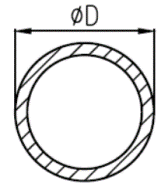

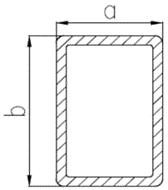
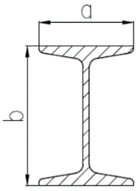
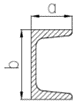

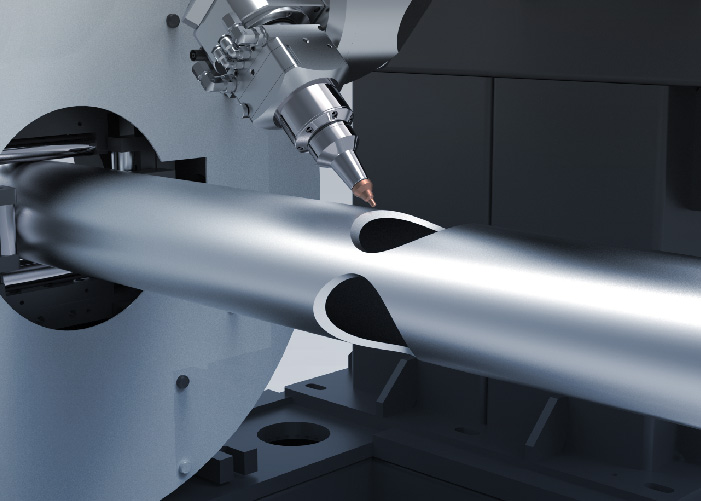
Modern fiber tube laser cutter can handle a wide variety of profile types, making them ideal for diverse manufacturing projects.
4. Faster Production Speed
Fiber laser technology offers significantly higher cutting speeds than conventional methods.
For example:
- Thin-walled tubes can be cut very quickly
- Complex contours can be completed without additional tools
- Multiple features can be processed in one run
For high volume production, this can significantly improve daily throughput.
5. Reduce Material Waste
Laser cutting software optimizes cutting paths and nesting to help manufactures maximize raw material utilization.
Benefits include:
- Zero-tailing cutting
- Optimized cutting sequence
- Reduced disassembly rate
Over time, this leads to lower material costs and higher profitability.
III. Common Structural Steel Applications
Fiber tube laser cutter is widely used in structural manufacturing industry, such as:
1. Steel structure
- Building frame
- Trusswork
- Column beam connector
2. Infrastructural project
- Bridge module
- Guard bar
- Highway structures
3. Industrial facility
- Duct frame
- Apparatus frame
- Transport system
4. Renewable energy sources
- Solar installation structure
- Wind turbine frame
In many cases, laser cutting allows structural parts to be prefabricated with high precision before delivery to the construction site.
IV. Key Features that Manufacturers Should Look For
When selecting a fiber tube laser cutter for structural steel applications, several technical characteristics are particularly important.
1. Automatic Tube Loading/Unloading Device
Automatic loading and unloading reduce manual intervention, improve efficiency, ensure stable material supply, minimize waste, and optimize the production process for continuous and efficient operation.
2. Large Chuck Clamping Range
Structural steel profiles vary widely in size. A wide range of machines can handle different tube diameters and shapes without frequent adjustments.
3. Intelligent CNC Control
Advanced CNC systems allow operators to:
- Import 3D design files
- Automatic generation of cutting paths
- Simulate cutting process
- Real-time monitoring of machine status
It provides real-time compensation and optimized cutting, enhancing precision and reducing reliance on operator experience.
4. Collision Protection for Cutting Head
Structural steel tubes are usually heavy and may be slightly deformed. The collision protection design helps protect the laser head and reduces downtime.
5. Bevel Cutting Capability
Modern fiber tube laser cutter can work with software to generate bevel drawings for tube processing. Supports multiple bevel types, facilitating subsequent welding.
V. Typical Power Range for Structural Steel Tube Cutting
The laser power required depends on the material thickness and yield.
Typical configurations include:
| Laser Power | Applications |
| 3-6kW | Thin-walled to medium-walled tubes |
| 6-12kW | Heavy duty structural tubes |
| 12kW+ | High yield industrial production |
Higher power allows faster cuts and thicker materials to be processed.
VI. How Tube Laser Cutter Can Improve Structural Manufacturing
For structural steel manufacturers, the adoption of fiber tube laser cutter offers several strategic advantages:
- Shorter production cycles
- Lower labor dependence
- Higher part consistency
- Greater design flexibility
- Improved assembly efficiency
These advantages help manufacturers remain competitive in industries where precision and production speed are increasingly important.
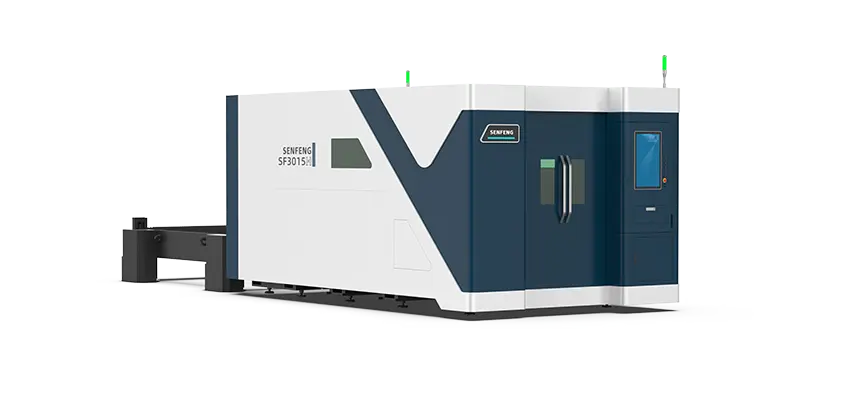
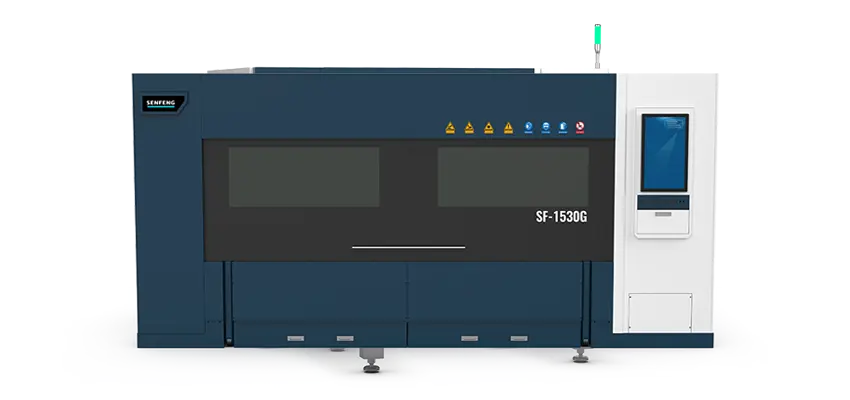
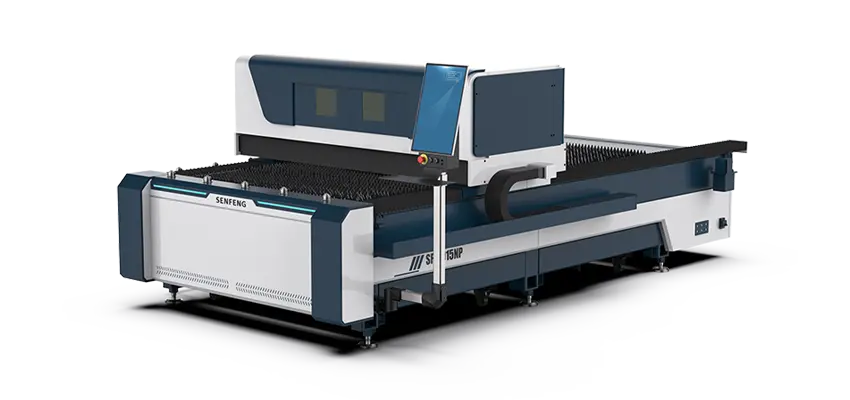
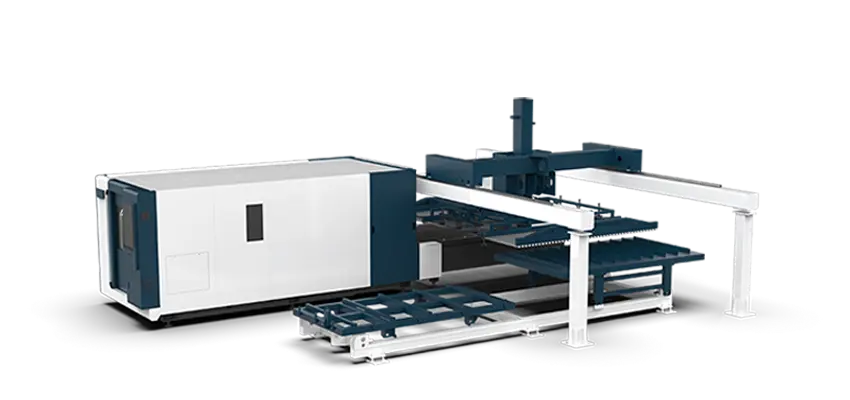
VII. SENFENG Advanced Tube Laser Cutters for Heavy Structural Steel
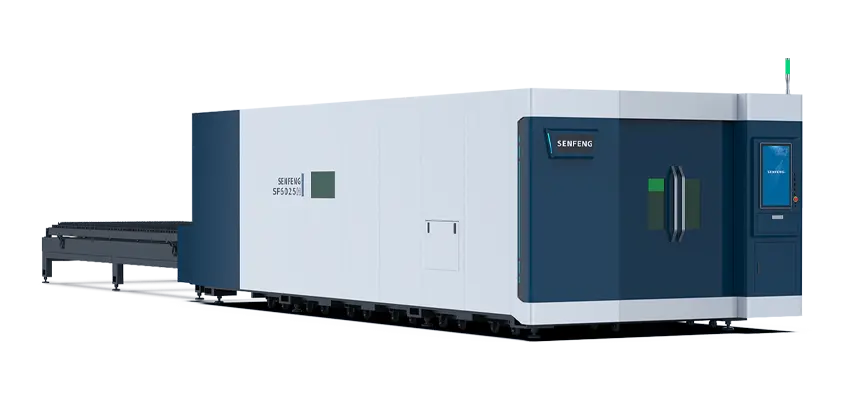
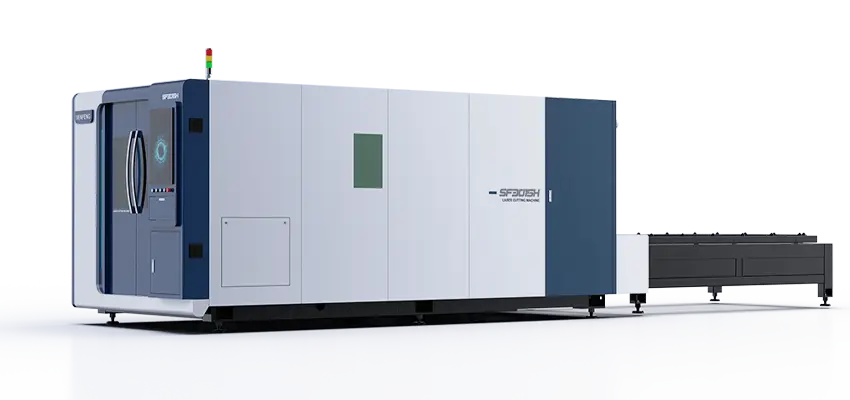
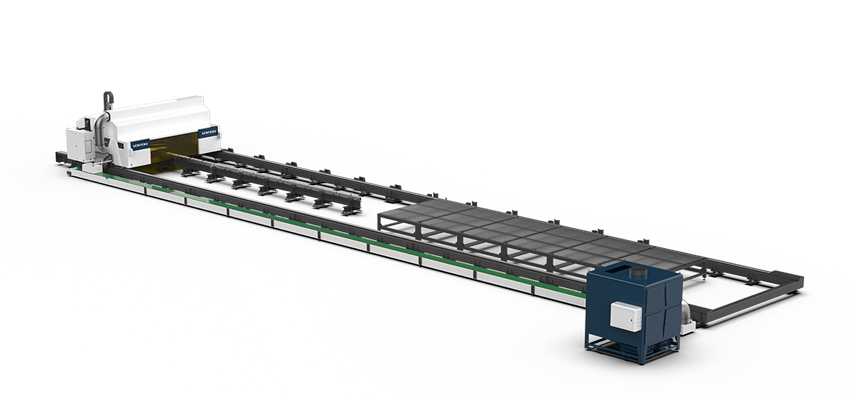
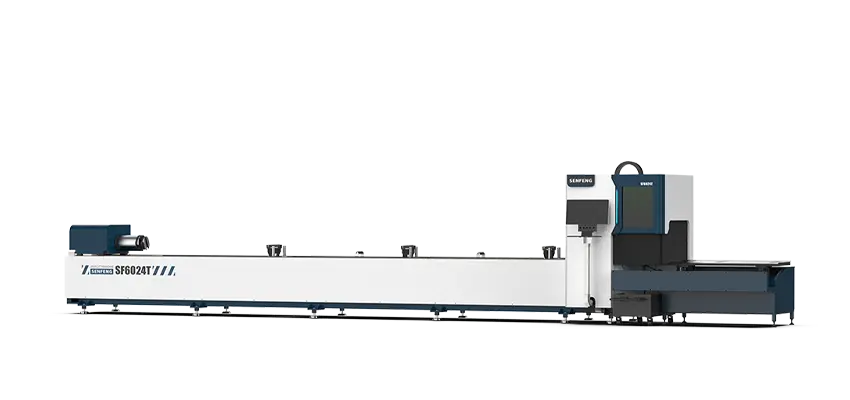
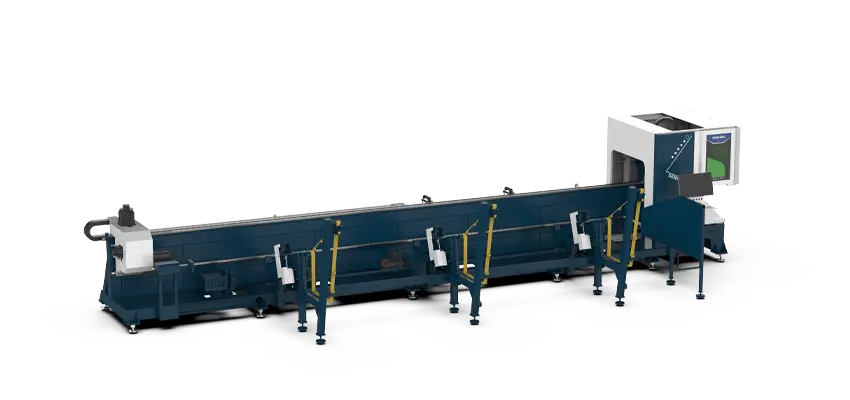
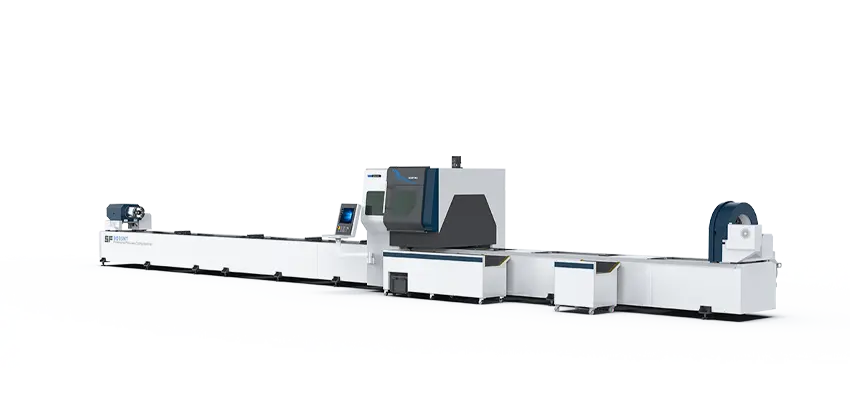
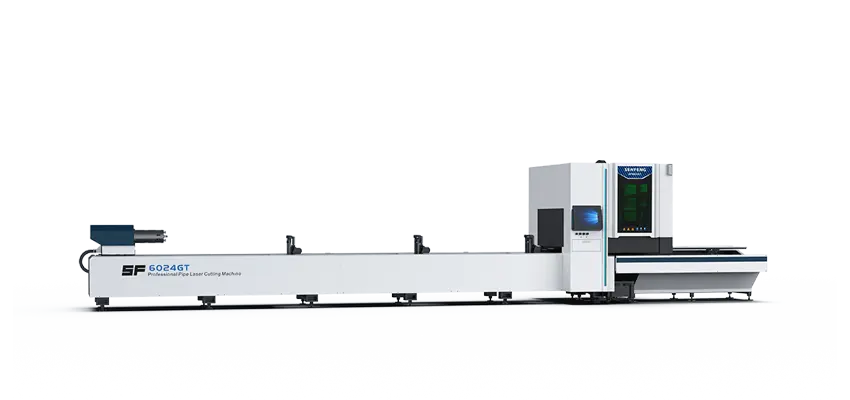
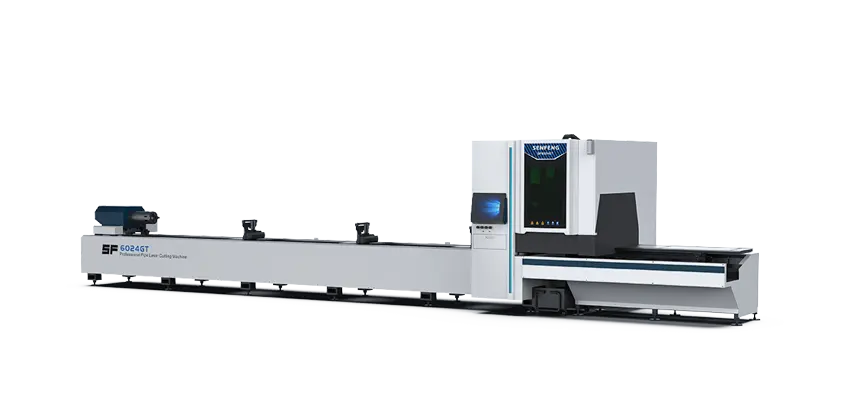
To meet the increasing demand for high-precision structural steel manufacturing, SENFENG offers a range of advanced laser cutting solutions designed for heavy duty tube and profile machining. These equipment are widely used in steel construction, bridge engineering and large-scale industrial manufacturing.
1. ST Series
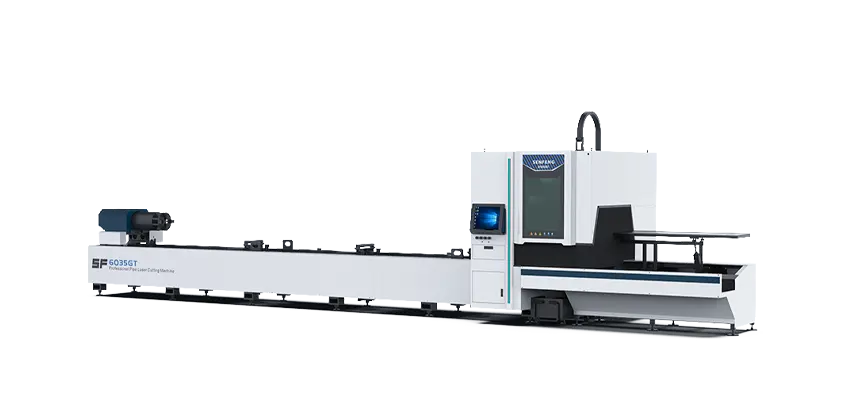
Three-chuck Heavy-duty Tube Laser Cutting Machine ST Series
Key Benefits:
- Three-Chuck Clamping for Maximum Stability
The three-chuck design ensures stable clamping throughout the cutting process, especially when machining long and heavy structural tubes. This improves the cutting accuracy and prevents deformation of the tube during rotation.
- Zero-Tail Cutting to Improve Material Utilization
With full stroke three-chuck coordination, the machine achieves zero tail cuts, allowing more to be used per tube and significantly reducing material waste.
- Heavy-Duty Capacity of Large Structural Tubes
Designed for structural steel manufacturing and is capable of processing large diameter and heavy duty tubes commonly used in construction, bridge engineering and heavy equipment manufacturing.
- Optional Bevel Cutting for Weld Preparation
The machine supports bevel cutting, allowing tubes to be directly prepared for welding, reducing additional machining steps in structural fabrication.
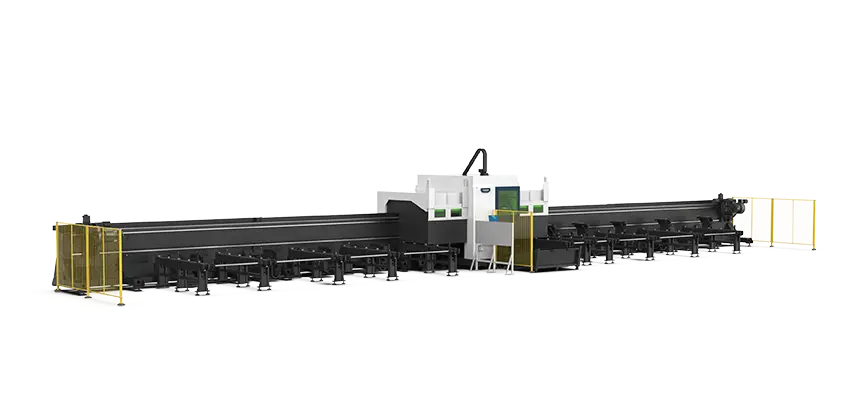
2. HT Series
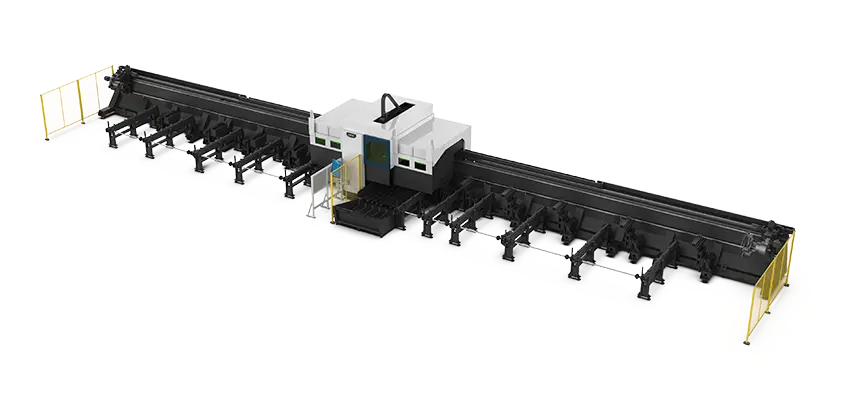
12m Tube Laser Cutter with Four Chucks SF12050HT
Key Benefits:
- Four-Chuck Clamping of Extra-Long Tubes
The four-chuck configuration provides multiple clamping points to ensure maximum stability when machining long, heavy structural tubes. This design minimizes vibration and improves cutting accuracy for large diameter materials.
- Zero-Tail Cutting to Reduce Material Waste
By coordinating chuck movement and bidirectional cutting, the machine achieves near-zero tail cutting, maximizing tube utilization and reducing production costs.
- Heavy Load Capacity of Large Structural Tubes
Designed for demanding industries, the machine supports tubes weighing up to 2000 kg and up to 500 mm in diameter for steel construction, engineering machinery and heavy manufacturing projects.
- Intelligent Tube Cutting Software
Integrated tube cutting and nesting software automatically generates cutting paths and optimizes layouts, improving cutting efficiency while reducing scrap.
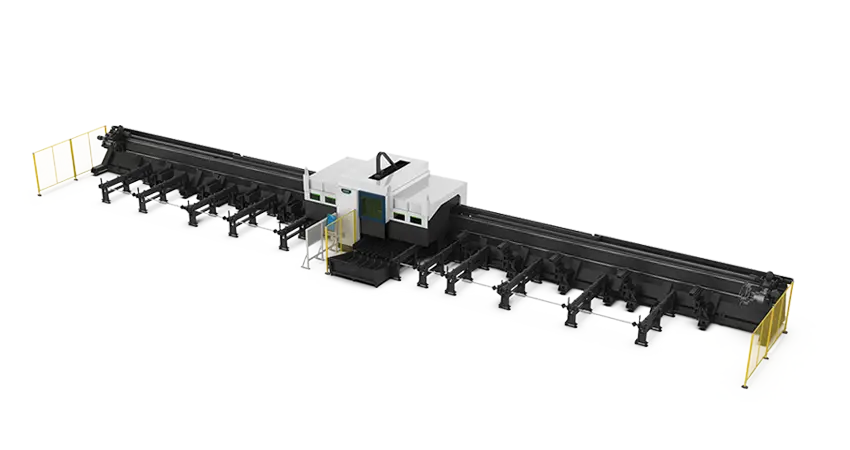
3. CH Series
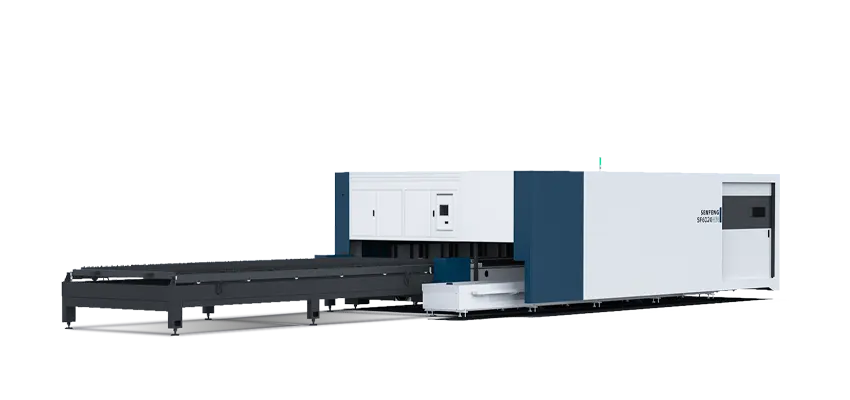
Large Profile Laser Cutting Machine for the Steel Structure Industry SF1500CH
Key Benefits:
- Designed for Large Structural Steel Profiles
Designed for cutting large H-beams, I-beams, and other structural profiles widely used in steel structures, bridges, and heavy engineering projects.
- High-Power Laser Cutter for Thick Steel Processing
Equipped with high-power fiber laser cutter ranging from 12 kW to 30 kW, capable of efficiently handling thick structural steels and heavy profiles for demanding industrial applications.
- Multi-Function Processing in One Set-Up
The machine integrates multiple operations, including cutting, beveling, marking, and holemaking, allowing structural steel components to be completed in a single workflow.
- Dual-Station Design for Continuous Production
With dual loading stations, operators can load new workpieces during the cutting process, reducing idle time and improving overall production efficiency.
More importantly, SENFENG provides reliable technical support. Manufacturers can receive installation guidance, technical service, and warranty support to keep production running smoothly.
Final Thoughts
Fiber tube laser cutter has become one of the most efficient technologies in structural steel manufacturing. By combining high precision, automation, and flexible machining capabilities, it enables manufacturers to produce complex structural components with fewer steps and greater consistency.
With the increasing demand for faster delivery and high quality standards in construction projects, fiber tube laser cutter are quickly becoming the core equipment of modern structural steel workshops.
FAQ
1. Why are fiber tube laser cutters more efficient than traditional structural steel processing methods?
Integrated Workflow: Traditional processing requires multiple machines and steps, such as saws (cutting), drill presses (drilling), milling machines (slotting), and manual grinding. A laser cutter can perform cutting, drilling, slotting, beveling, and complex shape machining in a single setup.
Precision and Quality: Laser cutting provides positioning accuracy of up to ±0.1mm with smooth, burr-free edges. This significantly shortens subsequent welding and assembly time at the construction site.
Cost Reduction: It reduces dependence on manual labor and material handling between different machines, greatly increasing daily throughput while lowering labor costs.
2. What core features should be prioritized when selecting a tube laser cutter for heavy structural steel?
Automatic Loading/Unloading System: Reduces manual intervention and ensures stability for high-volume, continuous production.
Large Stroke/Chuck Clamping Range: Structural steel comes in diverse sizes; a wide clamping range can accommodate different diameters and shapes (such as square, round, or H-beams) without frequent adjustments.
Three-Chuck or Four-Chuck Design: For long and heavy tubes, multi-chuck designs (such as the SENFENG ST/HT series) ensure stability during processing and achieve “zero-tailing” cutting, greatly improving material utilization.
Bevel Cutting Capability: This is a critical preparation step before welding structural steel. Supporting bevel cutting eliminates the need for secondary mechanical processing.