
Flame Cutting vs Fiber Laser Cutting: Key Differences for Steel Cutting
Stepping into a steel fabrication workshop, the first process in steel structure production is typically “blanking”. The primary task of blanking is to cut steel plates, laying the foundation for subsequent assembly, welding, and structural processing. In modern steel plate processing, the two most common cutting methods are “flame cutting” and “ laser cutting”.
So, how do these two steel plate cutting methods differ? What are the distinctions in the quality of cut workpieces and their applicable ranges? This article will provide a detailed analysis from the prospective of cutting principles, applicable materials, precision, efficiency, cost, and application scenarios.
I. Differences in Cutting Principles
1. Flame-Cutting
- Principle
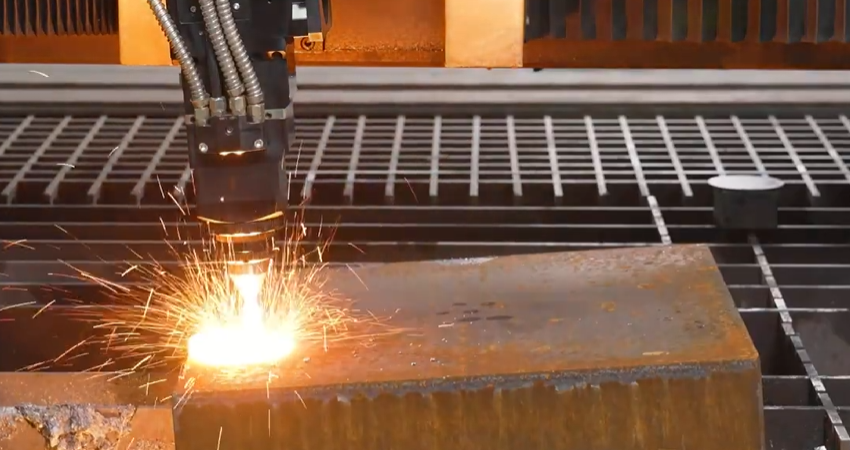
Flame cutting works through a chemical oxidation process. A preheating flame raises the steel surface temperature to its ignition point (approximately 900–1000°C). Once the metal reaches this temperature, a high-pressure stream of pure oxygen is directed onto the heated area. The oxygen reacts with iron in the steel, causing rapid oxidation (combustion). The resulting molten oxides are blown away by the oxygen jet, creating the cut.
- Key Feature
Flame cutting is a chemical reaction cutting method. The process relies on the materials combustibility, resulting in a relatively limited range of applicable materials.
2. Fiber Laser Cutting
- Principle
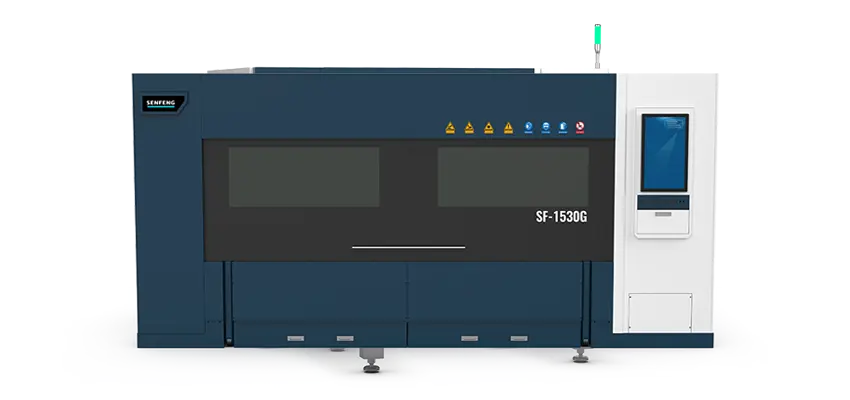
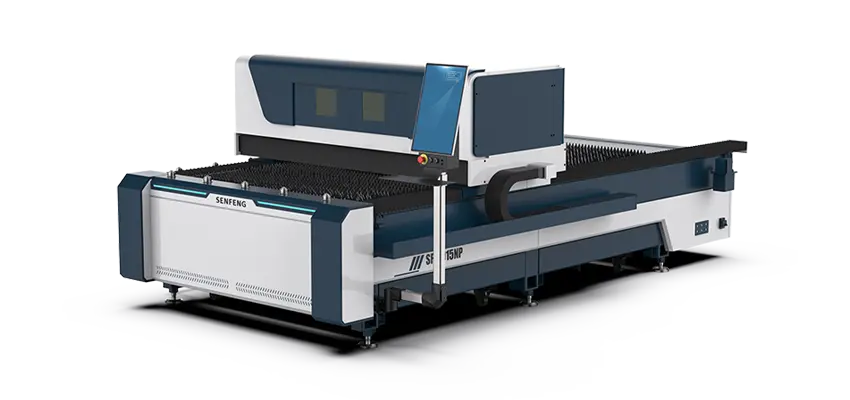
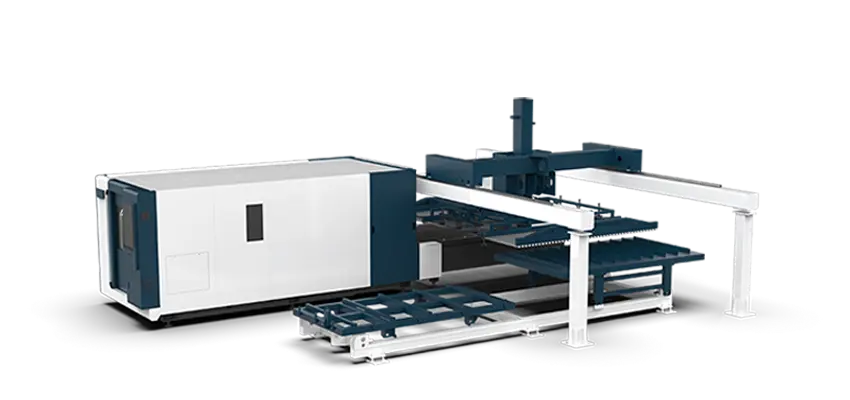
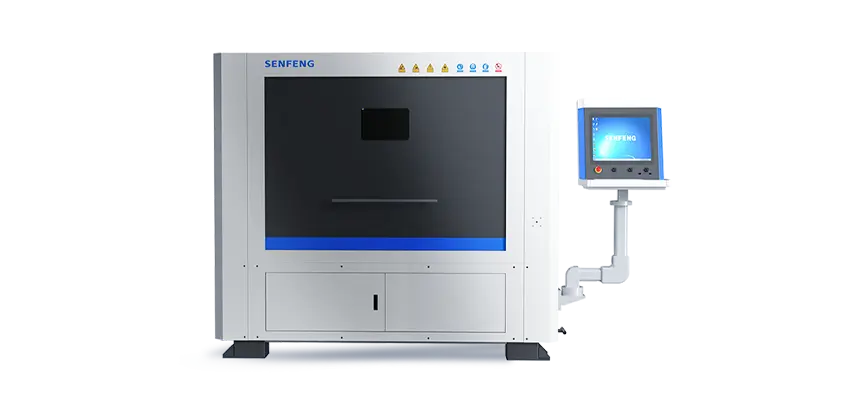
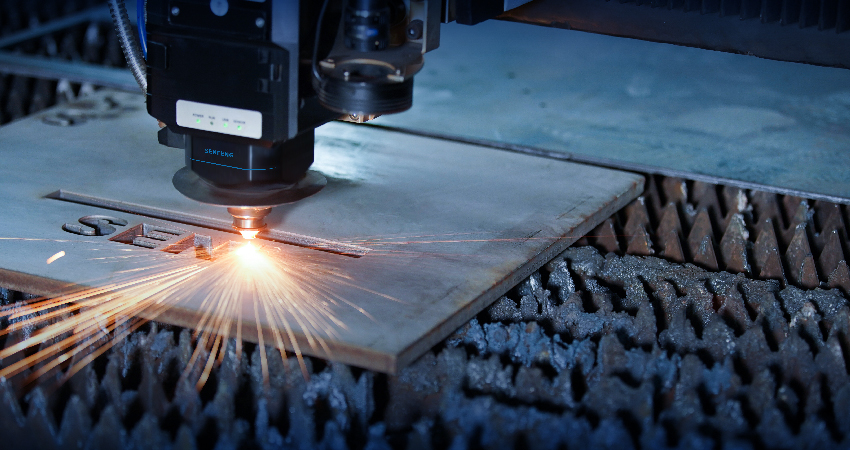
Laser cutting focuses a high-power-density laser beam onto the workpiece surface, causing the material to rapidly melt, vaporize, or reach its ignition point. Simultaneously, a high-speed gas flow coaxial with the laser blows away the molten metal, achieving high-precision cutting.
- Key Feature
Laser cutting is a high-energy physical melting or vaporization cutting method, primarily dependent on the material’s ability to absorb laser energy.
II. Key Differences Between Flame Cutting and Laser Cutting
1. Applicable Materials
(1) Flame Cutting
Has a narrower range of applicable materials, primarily used for carbon steel. Because the process relies on oxidation, materials such as stainless steel, aluminum, and copper cannot be effectively cut using this method.
Suitable for an extremely wide range of materials, including
- carbon steel
- stainless steel
- aluminum
- copper
- brass
- titanium alloys
2. Cutting Thickness
(1) Flame Cutting
- Excels at processing medium-thickness and ultra-thick plates
- Cutting range: 6mm to over 200mm
- Offers significant cost advantages when cutting steel plates over 50mm thick
(2) Fiber Laser Cutting
- More suitable for thin and medium-thick plates
- Fiber laser cutting of carbon steel typically handles up to 30mm (high-power equipment can reach 50mm+)
- Stainless steel and aluminum plates typically within 25mm
Fiber Laser cutting’s speed and cost advantages diminish progressively with increasing material thickness.
3. Cutting Precision
(1) Flame Cutting
- Cut width: Approximately 1.5mm-3mm
- Larger heat-affected zone
- Cuts typically exhibit a beveled edge (Larger at top, smaller at bottom)
- Dimensional tolerance: ±0.5mm-±2mm
(2) Fiber Laser Cutting
- Cut width: 0.1mm-0.5mm
- Minimal heat-affected zone
- Excellent cut perpendicularity
- Dimensional tolerance achievable: ±0.1mm or better
Therefore, laser cutting offers distinct advantages in precision manufacturing.
4. Cut Surface Quality
(1) Flame Cutting
- Noticeable cut lines on the surface
- Potential slag buildup on the bottom
- Typically requires secondary grinding
(2) Fiber Laser Cutting
- Smooth and fine cut surface
- Virtually no slag buildup
- Can often serve as the final machined surface
5. Processing Speed
(1) Flame Cutting
- Offers speed advantages when cutting thick plates
However, in thin plate processing, the required preheating process significantly slows it down compared to laser cutting.
(2) Fiber Laser Cutting
- Achieves extremely high speeds in thin and medium plate processing
- Particularly suited for complex geometries and batch part production
6. Thermal Deformation Characteristics
(1) Flame Cutting
Due to high heat input:
- Wide heat-affected zone
- Significant thermal distortion occurs in workpieces
- Unsuitable for precision thin-plate processing
(2) Fiber Laser Cutting
- Highly concentrated energy
- Minimal heat-affected zone
- Effectively controls material deformation
7. Equipment and Operating Costs
(1) Flame Cutting
- Advantages:
- Low equipment cost
- Low operating expenses
- Primary consumables:
- Oxygen
- Fuel gas (acetylene or propane)
(2) Fiber Laser Cutting
Relatively higher costs, including:
- Laser equipment investment
- Electricity consumption
- Laser and optical component maintenance
8. Automation and Processing Flexibility
(1) Flame Cutting
Typically suitable for:
- Straight-line cutting
- Simple curved cutting
- Limited capability for complex pattern processing
(2) Fiber Laser Cutting
Computer-controlled, enabling:
- Cutting of arbitrarily complex patterns
- Automatic nesting and processing
- Rapid production task switching
Highly suitable for flexible manufacturing and small-batch, multi-variety production.
III. Application Scenarios for Flame Cutting and Laser Cutting
(1) Flame Cutting
Suitable for thick plate heavy industrial processing, including:
- Steel structure manufacturing
- Shipbuilding industry
- Heavy machinery
- Bridge engineering
- Large steel plate blanking processing
Particularly suitable for thick-walled carbon steel structural component processing.
Suitable for high-precision manufacturing industries, including:
- Sheet metal fabrication
- Enclosure and cabinet manufacturing
- Automotive components
- Elevator manufacturing
- Kitchen equipment
Particularly suitable for thin to medium-thickness plates, complex structures, and high-precision parts.
IV. How to Select the Right Steel Plate Cutting Method?
In actual production, enterprises typically choose cutting technology based on material thickness, processing precision, and production costs.
If you need to:
- Cut steel plates tens or even hundreds of millimeters thick
- Achieve lower processing costs
We recommend: Flame cutting
If you need to:
Cut various metals within tens of millimeters thick
- Achieve high precision and better cut quality
- Improve production efficiency
We recommend: Laser cutting
V. Emerging Trend: Laser-Flame Hybrid Cutting
For industries that require both precision and speed in processing super-thick steel plates, SENFENG offers a laser-flame hybrid cutting solution. This advanced technology integrates the advantages of fiber laser cutting and flame cutting into a single machine.

SF-TXP Series Laser-Flame Hybrid Cutting Machine
Key Benefits:
- Efficient processing of extremely thick plates (beyond the capacity of traditional laser cutting alone)
- Maintain high precision in the critical sections.
- By combining the advantages of the two technologies to reduce the overall processing time
- Suitable for steel structures, shipbuilding, bridge engineering and heavy machinery manufacturing
- By employing this hybrid approach, manufacturers can strike a balance between cutting speed, quality and cost, opening up new possibilities for the production of large quantities and thick steel plates.
If you want to know more details, please click on Laser-Flame Hybrid: Efficient Cutting for Ultra-Thick Plates
Conclusion
Overall, flame cutting and fiber laser cutting each possess distinct advantages. Flame cutting demonstrates clear strengths in thick plate processing and cost control, while laser cutting excels in precision, efficiency, and automation capabilities.
In modern manufacturing, many enterprises equip themselves with both technologies, flexibly selecting based on achieve the optimal balance between efficiency, quality, and cost.